



GEO: Optimising for AI

Updated: Sep 26
What is GEO and why does it matter now?
Generative Engine Optimisation (GEO) is the practice of structuring content so that it can be understood, selected, and synthesised by AI systems, not just ranked by search engines. As search evolves through platforms like Google’s AI Overviews and tools like ChatGPT, users are no longer just clicking links; they are receiving generated answers compiled from multiple sources.
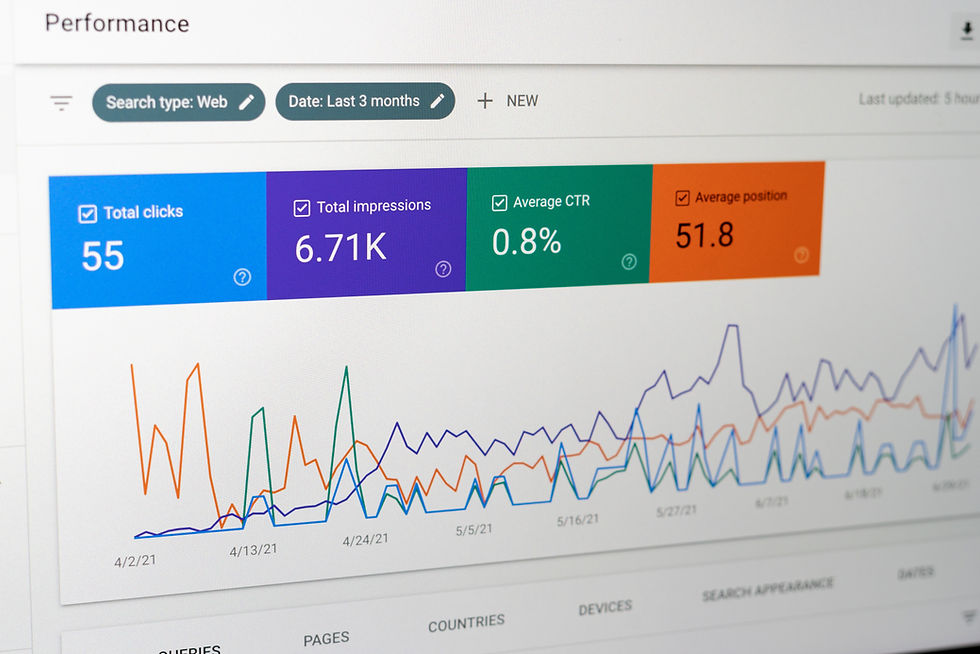
As the Digital Marketing Institute explains (https://digitalmarketinginstitute.com/blog/what-is-seo-geo-and-aeo), GEO reflects a shift from “being found” to “being used” within AI-generated responses. This blog explores how GEO works, why most content fails in this environment, and how to structure content that AI systems actually recognise and prioritise.
From search results to generated responses
Traditional SEO assumes a linear journey: search → click → website. GEO disrupts this model entirely. AI systems now aggregate, interpret, and rewrite content, meaning your visibility depends on whether your content is selected as a source, not just whether it ranks.
A strong example is Shopify, whose SEO guide (https://www.shopify.com/blog/seo-guide) is structured as a comprehensive, authoritative resource. Its clarity, internal linking, and topic depth make it highly usable not just for users, but for AI synthesis. This signals a deeper shift: content must now function as structured knowledge, not just marketing output.
Why most content fails in AI search
Many brands are still writing for keywords alone, which limits their visibility in AI environments. Content often lacks:
● Clear structure and summaries
● Defined entities (people, places, concepts)
● External validation (citations, backlinks)
● Coherent topical authority
Without these, AI systems struggle to interpret and trust the content. As McKinsey & Company notes in its AI research (https://www.mckinsey.com/capabilities/quantumblack/our-insights/the-state-of-ai), organisations that fail to structure their data and knowledge effectively are less likely to benefit from AI-driven systems.
How to structure content for GEO
Optimising for GEO requires a shift in how you write and organise content. It is no longer about inserting keywords; it is about designing information for machines to interpret. Content should:
Answer specific, clearly defined questions
● Demonstrate topical authority across related content
● Include concise definitions (ideally under 50 words)
● Use structured formats like FAQs and summaries
● Reference credible external sources
● Apply schema markup (FAQ, HowTo)
● Use entity-based writing (not just keywords)
For example, instead of writing broadly about “SEO tips,” content should define concepts clearly, connect them to recognised entities, and build depth across multiple related pages.GEO makes one thing clear: visibility is no longer about ranking first; it is about being understood and reused. Structured, credible, and contextually rich content will increasingly shape how AI systems generate knowledge.
If AI tools aren’t picking up your content, it’s already losing visibility. Book a strategy session with Pinnacle Business Hub to future-proof your content.
Prepare Your Content for the Future of Search
Frequently Asked Questions
What is Generative Engine Optimisation (GEO)?
GEO is the process of structuring content so AI systems like ChatGPT and Google AI Overviews can interpret, reference, and use it in generated answers.
How is GEO different from traditional SEO?
SEO focuses on improving rankings in search engine results pages, while GEO focuses on making content understandable and reusable by AI systems that generate responses directly for users.
Why is GEO becoming important for businesses?
Search behaviour is changing rapidly. Users increasingly rely on AI-generated answers instead of clicking multiple website links, meaning businesses need content that AI systems can recognise and trust.
What type of content performs well in GEO?
Content that is well-structured, authoritative, fact-based, and clearly organised performs best. FAQs, concise definitions, entity-based writing, schema markup, and credible citations all improve AI visibility.
How can I optimise my website for GEO?
Start by creating clear, topic-focused content with strong internal linking, structured headings, concise summaries, schema markup, and trustworthy external references. Building topical authority across related pages is also essential.


Comments